Author Jo Ann Bernstein
of Luv'N Chins
Why
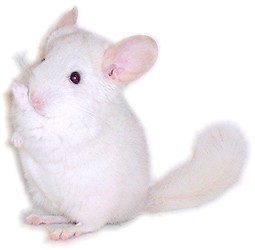
A question as old as the ages, but still being asked. Asked over a multitude of subjects and with just as many and even more answers. Today it is chinchilla-related "Why?s".
(1) Why love a chinchilla? You just can't help it! They are cute, playful, cuddly, wise, soft, attentive and they love you back without question. They do not care if you are young or old, thin or fat, white or black, happy or sad, funny or boring, they love you just the way you are.
(2) Why wash, rinse and refill a water bottle with fresh water every day? Most water contains minute amounts of Giardia, germs and bacteria. After 24 hours at room temperature, these can multiply to a point that a chinchilla's life may be endangered by drinking it. Besides, would you want to drink from the same glass day after day without washing it???
(3) Why dump the left-over food? Food left out in temperatures above 70 degrees breaks down faster than the cooler areas you store them in, also ants or other insects may get into the food.
(4) Why NOT add food to a bowl that looks like it has plenty in it? Often times you will find that you have a very neat chin that eats its food over its bowl ... allowing the crumbs to fall into the bowl. These 'crumbs' will fall between and below solid pellets and build up a powdery base under the pellets making it "appear" that the bowl is full of pellets.
(5) Why open the cage and check the 'J' feeder when your new chin does not seem to be eating very much? Many breeders have different types of feeders for their chins. Some use a very small 'troth' type feeder that holds only about 1 tablespoon of food. Chinchillas that are use to these do not know how to scrape the bottom of a 'J' feeder shoot to allow more food to come down to them. They will often even fill the bottom of the feeder with poop pellets and the chinchilla food pellets can not fall down to an area where the chin can get to them.
(6) Why NOT feed your chin special treats (or anything) through the cage wire? Chinchillas have bad vision. When someone else comes along and sticks their finger into the cage to pet, scratch or rub the chinchilla ... the chin will think they are offering a treat and bite them.
(7) Why feed your chin hay daily? Hay provides your chin with needed fiber, nutrients and vitamins. Hay also helps the chin keep its teeth worn down to the proper size.
(8) Why make sure your chin has a lava/pumas stone in its cage at all times? The stone is used by the chin to keep its front teeth worn down to the proper size.
(9) Why keep pine chew sticks for your chin? These also help to keep the chins' teeth worn to the proper size.
(10) Why worry about the length of a chinchilla's teeth? Chinchillas' teeth grow constantly, if they do not wear them down and keep them the proper size, the teeth can grow into the brain, the jaws and the base of the tong. Any of these are/can be life-threatening and often a slow painful death for a chinchilla.
(11) Why make sure you are giving your chins the best chinchilla food available that you can afford? The old human saying "You are what you eat." goes for chinchillas, too. If they are fed a good balanced diet, they will usually grow-up healthy, if not, they will not.
(12) Why do you need air conditioning? With a chinchilla, 75 degrees or above for even a few minutes can cause a chinchilla to have a heat stroke. Never leave a chin in the sun (even on a cool day) or in a car to run in on a quick errand ... he may not be alive when you come back.
(13) Why NOT house your chinchilla outside? Cold, heat, humidity, rain, cats, dogs, wild animals, mice, bugs, ect. All the same reasons you do not live outside in a wire cage.
(14) Why store a chinchilla's food in a cool, dry, air-tight place/container? To keep the nutrients at their highest level for the maximum about of shelf-life, to keep bugs out of it, and to keep mice out of it that could transmit diseases to your chin.
(15) Why insist on buying chinchilla food in an air-tight, undamaged container? To assure that the food has not been exposed to varmints, bugs, ect.
(16) Why clean your chin's cage weekly? To keep it free of any bugs, germs, bacteria or mold. For the same reasons you like a clean home.
(17) Why insist on a 'mill-date' and/or expiration date on chinchilla food? For the same reason you do this for your own food ... to make sure it is fresh and safe to eat.
(18) Why keep up with the amount of food and water intake of your chinchilla? When a chin cuts back even as little as 25% of their intake of food and/or water, it can be an early sign of illness.
(19) Why do chinchillas appear to be 'just fine' then they get terribly sick and die within a day or so? In the wild, chinchillas could not afford to appear unhealthy or injured, if they did, they would become easy prey for the predators. Unfortunately, this trait is still with the chinchillas today ... they are usually sick or slightly injured long before we realize it. A slight injury, even the smallest, can become infected, abscess and even kill.
(20) Why is it important to weigh your chin weekly? Chinchillas will often loose weight as an early sign of illness. Using a scale that weighs in 1 or 2 graham increments is best. Scales that weigh in ounces and pounds is not accurate enough ... once a chin has lost an ounce, it could already be in danger. For a kit under 6 weeks old, a loss of 5 grams is a blinking caution sign ... there are over 25 grams in an ounce. Weighing in ounces is not adequate.
(21) Why is it best to get your chin to a vet immediately instead of making an appointment a few days from now? To put it in my vet's own words, "I thought guinea pigs 'go down' fast, but chinchillas have them beat." 'Go down' means to become deathly ill or to die. When a chinchilla needs a doctor's attention, it needs it NOW not later.
(22) Why is a chinchilla a long-term investment? If they are healthy and properly taken care of, they can live to be over 20 years of age. I know of two that made it into their 30s, but the average is 15 years of age.
(23) Why is it important to play with my chin daily and at the same time each day? Chinchillas thrive on attention and love to be on a regular schedule. Just as you look forward to the end of the day at school or work, so does a chin love to look forward to your daily playtime with them.
(24) Why chin-proof? Chin-proofing is a way to help keep your chin safe. They love to eat, chew on and taste everything from food to wood to electrical wires, and yes, even to metal! They can chew a 1/4" diameter aluminum rod in half in less than 3 hours. They can, will and enjoy re-decorating anything and everything with their busy little teeth! To chin-proof, get a chins-eye-view of the place ... from laying on the floor to find cubby holes, to looking over head and everywhere in-between. Your curious chinchilla will check them all out! Cats have nothing over chins when it comes to being curious!
(25) Why pad-lock a chinchilla cage? To keep unauthorized humans out and chinchillas in. Many chinchillas are smart enough to figure-out how to make the spring hook on the cage door to come unhooked and give them their freedom to dangerously run and play unsupervised. Other people that have not been around chinchillas have no idea how quickly they can escape if the door is opened, nor how hard they may be to catch with out stressing them.
(26) Why house any and all chinchillas in a cage with wire no larger than 1/2" (size of a dime) x 1"(size of a quarter)? Because this is the size that is safe for baby chinchillas or kits to be born into. So, you have a single 'male chinchilla', or two male chinchillas, or two female chinchillas or one female chinchilla ... you should not have to worry about kits because you don't plan to breed. WRONG! To many times have I received e-mails or phone calls beginning with: "Help! My 'male' chin just had kits." or "My female chin that I've had for 3 months just gave birth to a kit!" You guessed it ... the person selling the chin did not know or did not check closely enough and 'thought' they were selling you a male. OR a male chin had accidentally been placed in with female chins. Regardless of what happened, you have a kit/kits you did not plan on having, but please don't let them die because you have the wrong size wire on your cage.
(27) Why separate a male kit from its mother and sister by the time it is 12 weeks old? Because a male kit at the tender age of 12 weeks has the ability to impregnate a female.
(28) Why separate a female kit from its daddy or any other male chins by the time it is 3 1/2 months old? Because a female kit has the ability to become pregnant, but is not fully developed and usually not able to safely carry and/or give birth to kits. Also, the female needs all the calcium and nutrients she gets to help her body to grow to adulthood before the kits she is carrying will take it from her.
(29) Why separate the male from the female before or as soon as the kits are born? A female chinchilla goes in season as soon as the last kit is born and stays in season for about 10 days. During this time the male can impregnate her again. This is called breed-back and is not healthy for mom, the new kits and/or the unborn kits ... it will put a strain on all of them from the lack of adequate nourishment for all of them.
(30) Why keep momma chin away from the dust bath for 24 to 48 hours before her kits are born? To avoid the chance of infection from the dust entering her body or the kits eyes and/or lungs.
(31) Why wait until 10 days have passed to allow momma chin and her kits to have a dust bath? To avoid the chance of infection from the dust entering her body or the kits eyes and/or lungs. Day 10 is also the day when momma and daddy can be reunited.
(32) Why have a nursing kit ready before the kits are born? Sometimes a momma's milk will not come in, the death of the momma chin, not a sufficient amount of milk to feed all kits born or damage to the momma's mammary glands from the kits fighting. Kits need nourishment within the firs 12 to 18 hours to survive.
(33) Why must you have three or more cages available when kits are due? To avoid incest when the kit is old enough to impregnate them, to allow momma chin to take care of the kits without getting pregnant by daddy chin immediately, to have cages for the momma and daddy chin and separate cages for male and female kits after 8 weeks.
(34) Why use pine or recycled paper for a bedding for your chin? These are safe for your chin to use, pads it's tender feet, absorbs liquids, provides something to chew on and a soft bed to sleep in. Chins that are on bare wires constantly are subject to bumblefoot ... very painful.
(35) Why NOT use bedding/litter with additives to prevent odor? Chinchillas do not have or have very little odor ... not to mention the vapors from the additives will/can cause an infection in the lungs and possibly kill your chin.
(35) Why can't you use cedar chips as bedding for chinchillas? Because cedar and many other woods are deadly to chinchillas due to the fumes they make or in the content of the wood itself.
(36) Why can't you use an aquarium for housing a chin? There is not enough air-flow to rid the area of the fumes and bacteria growth the solid walls of an aquarium will cause.
(37) Why can't you use a fan to cool your chin? Because a chinchilla does not sweat, therefore, the breeze will not cool the chin, but can cause other complications. Never blow air ... hot or cold ... directly on your chin. Keep them out of the wind and drafts ... cold or hot.
(38) Why can't you bathe your chin in water? Because it can chill and die ... chinchillas are not suppose to get wet unless it is an emergency and then, preferably, only under the instructions of a vet.
(39) Why do you need a whelping cage no higher than 15" and with thick bedding? When momma chin delivers, the kits are born eyes open and fully furred. They will start playing usually within 30 minutes and normally, within the first 24 hours they will amaze you by climbing to the top of the cage, turning loose and falling to the bottom of the cage ... you need that extra thick bedding as a soft landing place.
(40) Why do the kits fall to the bottom? Because chins can climb up, but not down. Once the kits/chin reaches the top they will fall or jump to a lower level.
(41) Why is it important NOT to have a wooden hut, shelf or ledge in the whelping cage? Many new moms will become aggravated with her new kits and try to get away from them ... a ledge or a shelf, or a the top of a hut is a perfect place to do this. But the kits can easily become chilled or starve when momma leaves them alone. An empty tissue box provides a nice warm, protected place for momma and kits to huddle. Also, if a kit has climbed to the top and falls on the hard edge of a hut or ledge, it could break it's back, have a head injury or break a limb.
(42) Why support a chin's feet and hind legs when you hold them? So they will not be afraid and think they will fall. In short, so you will not scare them and so they will trust you.
(43) Why is it important NOT to hold a chin under it's front arms? Because chins have 'floating' ribs that can easily break and puncture the lung. Their bones are smaller than a toothpick. A punctured lung is almost certain death within 24 hours.
(44) Why is it important to make sure your other animals have all their shots? Feline distemper (cat pneumonia) is very contagious and can kill a chin in less than 24 hours.
(45) Why wash your hands and face before handling a chinchilla? To remove any odors of food a chinchilla may think is a treat.
(46) Why can't you invite everyone over to see your new chin when you get it home? Because it must get use to you first, so it can feel safe and not be stressed by strangers. A chin is away from it's family, in a new place and with a bunch of strange giants around him. Wouldn't this stress you? Wouldn't you want to know that at least one of these 'giants' was your friend and a safe person to run to?
(47) Why keep your stereo, radio, t.v., family pets and rowdy kids down or away from your chin? Because sudden and/or loud noises can stress a chin. Kids love to cuddle and hug soft things ... a chin has the softest fur known to man ... but a hug could kill.
(48) Why be concerned about stressing your chin? Because stress can kill a chinchilla!
(49) Why can a chin stress over a simple thing like moving it's cage, skipping a night of play time, or not giving it it's regular daily treat? Because chins prefer consistency, order and schedules ... something we need to apply to our own lives.
(50) Why worry about all these questions and many more? Because you love your chin and you should try to treat it like you would want to be treated, if things were reversed. If you do not feel this way, in my opinion, you need to find a new home for your chin/chins.
|
|
